
Liv & Gall Fresh
£13.99
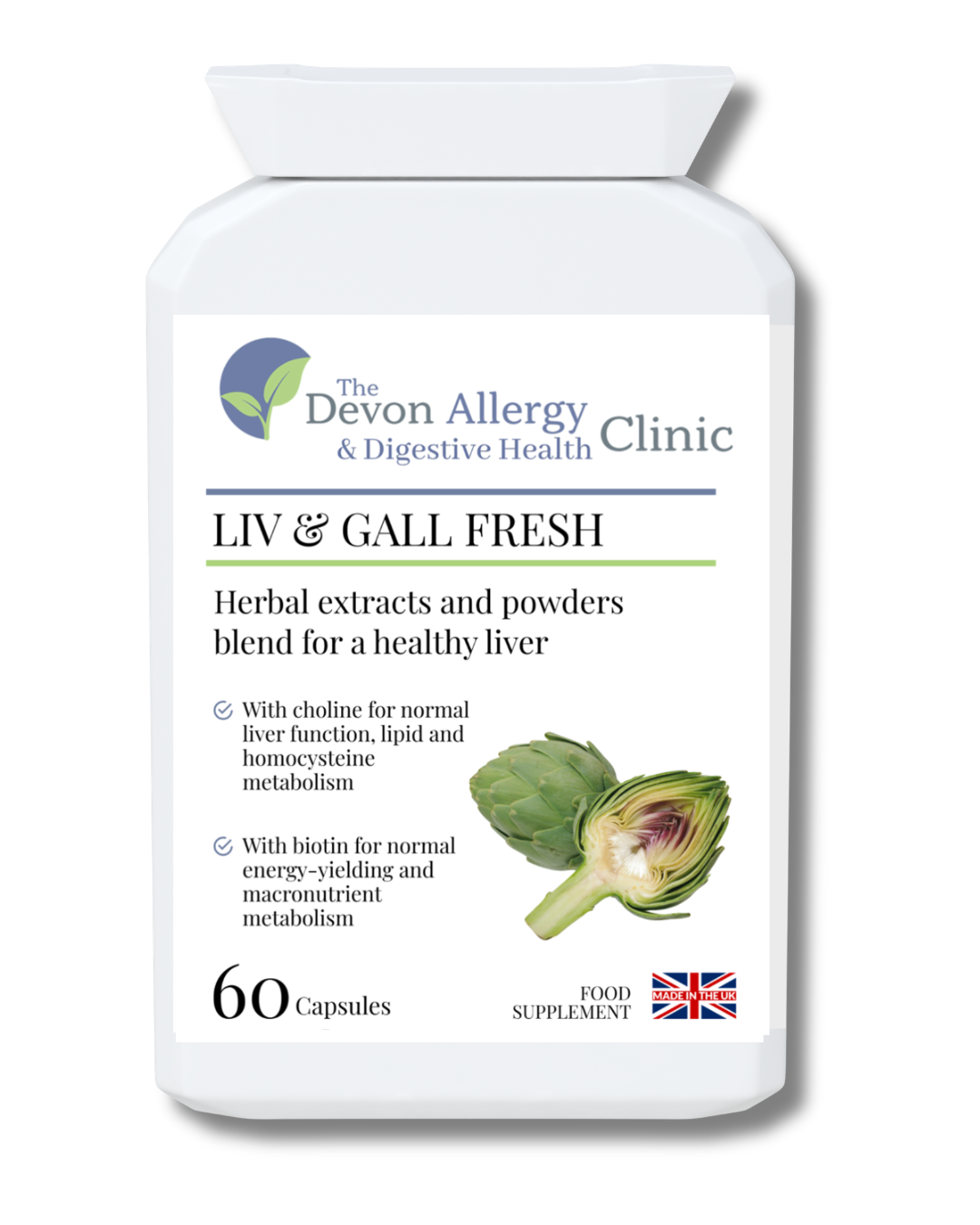
Description
The liver plays a vital role in overall health and wellbeing, supporting the body’s natural detoxification processes and helping to remove waste products and environmental toxins. Responsible for hundreds of essential functions, the liver helps process nutrients, support digestion, regulate energy and cleanse the blood of impurities.
Alongside the digestive system, kidneys, skin and lymphatic system, the liver works continuously to support the body’s natural elimination pathways. Factors such as stress, poor diet, alcohol, environmental pollutants and modern lifestyle demands can place additional strain on these systems, making nutritional and lifestyle support increasingly important for overall wellbeing.
Additional information
| INGREDIENTS | Per capsule: %NRV* *NRV = Nutrient Reference Value Also provides: Ingredients: Choline Bitartrate; Capsule: Hydroxypropyl Methylcellulose (HPMC); Artichoke Extract; Parsley Leaf Powder; Bulking agent: Brown Rice Flour; Beetroot Extract; Burdock Root Extract; Anti-caking Agent: Magnesium Stearate (vegetable source); N-Acetyl L- Cysteine (vegetable source, from corn); Anti-caking Agent: Silicon Dioxide; Alpha Lipoic Acid; Liquorice Root Extract; Fennel Seed Extract; Turmeric Extract; Black Aged Garlic Extract; Cayenne Powder Extract; Dandelion Root Extract; Ginger Root Extract; Biotin Pure. Contains no added: artificial colours, flavourings, preservatives, dairy products, gluten, lactose, soya, sugar, wheat or yeast. |
|---|---|
| USAGE | Take 1 capsule, 1 to 3 times per day or as required. |